


Eight trilogies where every film is a masterpiece, from Back to the Future to The Lord of the Rings — Star Wars is out on a technicality

Three films and done, each one strong: the Cornetto, Dollars, Dark Knight, Before and Three Colours trilogies make the list alongside Middle-earth.
Ask any cinephile what the best movie trilogy of all time is, and you'll usually end up in a heated debate that leaves everyone slightly annoyed and no one fully satisfied. It's much harder than it looks. Most film trilogies can barely make it through the second entry without a fumble, and by film three… well, let's just say there are plenty of cautionary tales. Pick your poison: Spider-Man 3's jazz-hands embarrassment, or the Godfather's third-act stumble. Now, with studios milking franchises dry and churning out belated sequels that never know when to quit, actually ending a trilogy on a high is a minor miracle. For this list, I'm sticking to proper trilogies—that means three and done, no extras tacked on later, and every film has to be at least a banger. No points for nostalgia or forgiving poor entries just because the first was good. Here are the trilogies that nailed it three times in a row—no weak links, and, crucially, no fourteenth sequel quietly dumped on streaming years later.
The Lord of the Rings is the only trilogy where every film was nominated for Best Picture at the Oscars and Return of the King took home 11 wins.
Almost Made the Cut
Before you get annoyed that Star Wars or Indiana Jones are missing, let's get this out of the way: the original Star Wars run (Episodes IV to VI) would absolutely be near the top on quality alone—same for Indy's first three whip-cracking adventures. The problem? Neither stopped at three. These lists are for honest-to-god trilogies only, not massive franchises with timelines and spin-offs that now require a dissertation to explain.
The Main Event: The Only Truly Great Movie Trilogies
- The Cornetto Trilogy
Nobody used the word 'trilogy' more cheekily than Edgar Wright, Simon Pegg, and Nick Frost did with Shaun of the Dead, Hot Fuzz, and The World's End. These three aren't connected by mythology, plot or even genre—only by a recurring ice cream and a shared sense of what makes British genre films tick. Shaun revives the zombie film with a massive wink; Hot Fuzz dials small-town England up to eleven with more action than most Hollywood blockbusters; The World's End is a pub crawl through midlife crisis and alien invasion. The common denominator is ridiculous attention to detail: every running joke is plotted with almost mathematical precision. Pegg and Frost never get tiresome and Wright's pacing is tighter than most action directors. Odd little trilogy, but absolutely deserves its slot.
- Back to the Future Trilogy
If there were an award for tightest scriptwriting in Hollywood, the original Back to the Future would walk away with it. Every set-up has a pay-off, even props in the background end up mattering, and the time travel actually holds up to five seconds of logical scrutiny. The sequels could have coasted but instead get more ambitious—Part II is a full-on mindbender, and Part III (cowboys!) gives Doc Brown the emotional arc he deserves. None quite match the first, but all three are clever, funny, and visually inventive, which, frankly, is rare for anything with a 2 or a 3 in the title.
- The Dollars Trilogy
Sergio Leone's 'spaghetti western' cycle—A Fistful of Dollars, For a Few Dollars More, The Good, the Bad and the Ugly—is how Clint Eastwood became a legend. Leone brushes aside subtlety, goes big on the dusty visuals, Morricone's whistled scores and those earth-shaking shootouts. It gets better as it goes: the first film sets up the template, the second tightens the character work, and the third… well, even if you've never seen it, you've definitely seen it referenced or parodied every year since. Leone changed the western forever, and every entry here is peak cinema bravado.
- The Dark Knight Trilogy
Most superhero sagas either sprawl out of control or collapse before completing their arc. Christopher Nolan, somehow, pulled off a tight, fully-formed trilogy: Batman Begins gave Bruce Wayne the first psychologically grounded origin anyone had seen in years. The Dark Knight raised it all up with Ledger's chaotic, genre-defining Joker. The Dark Knight Rises finishes things on its own terms—some fans argue about the ending, but it's a trilogy that knows what it wants to say about legacy, sacrifice, and whether you can really hang up the cape. All three are stylish, muscular, and ambitious. Not a misfire in sight.
- The Before Trilogy
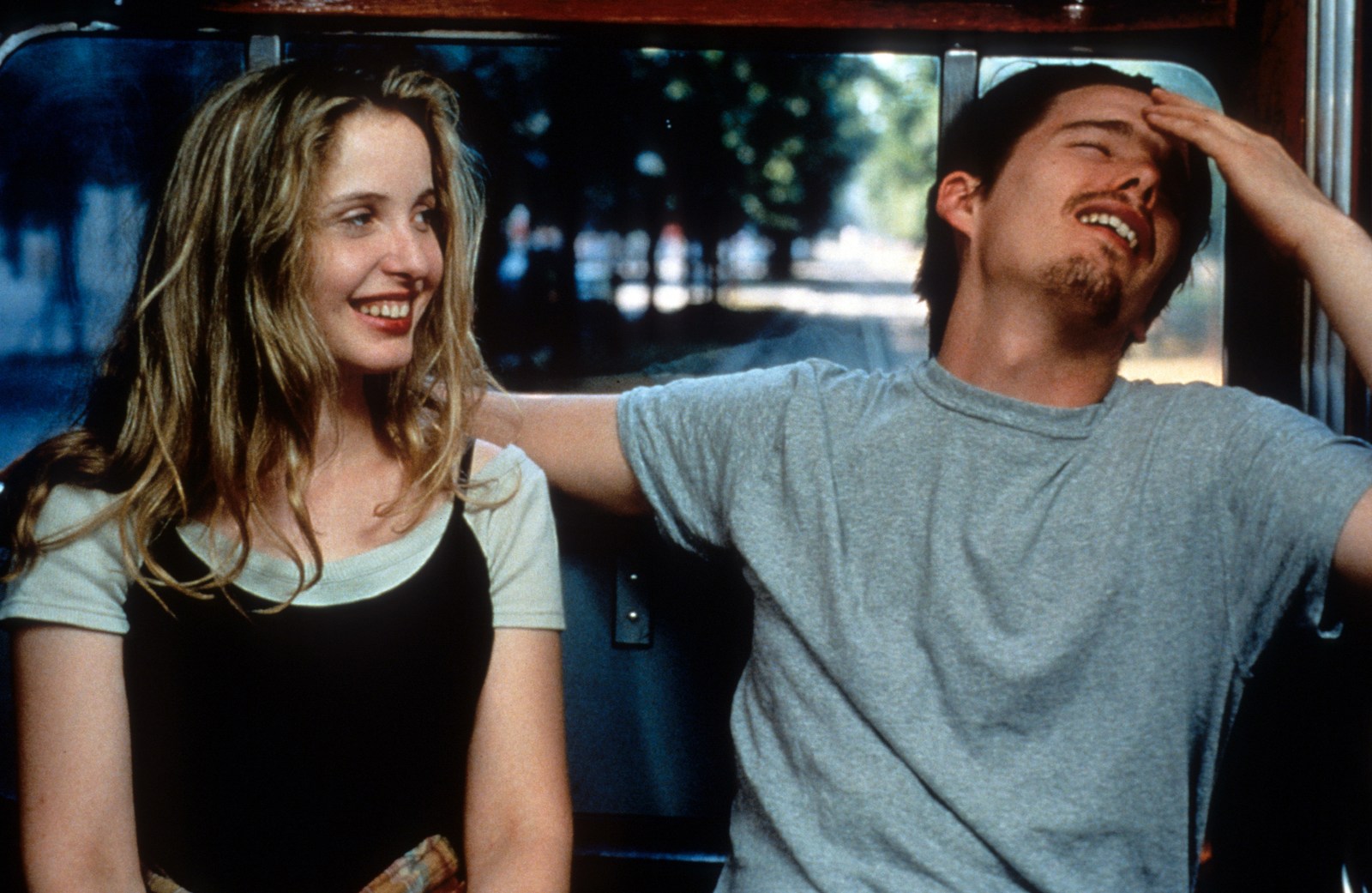
If you think all great trilogies need dragons, guns, or time machines, Richard Linklater's Before Sunrise, Before Sunset, and Before Midnight prove otherwise. Three films—each nine years apart—watch Ethan Hawke and Julie Delpy's characters meet, reconnect, and face the reality of lasting love. The first is all charm, the second a bittersweet reunion, the third a painfully honest look at marriage. The genius isn't in what happens, but how much the smallest comments cut deeper as the years pass. No other trilogy captures romance this honestly.
- Three Colors Trilogy
Kieślowski's Three Colors—Blue, White, and Red—use the French flag (and its values) as a jumping-off point, but don't be put off by the high-concept. Each film stands on its own and, if you're looking for the most thoughtful and visually meticulous trilogy of the lot, this is it. Blue is intimate and devastating, White manages to be funny and bleak simultaneously, and Red connects all the threads in a low-key, magical way. If you want cinema that actually respects character contradictions, this is the one to watch.
- The Apu Trilogy
Satyajit Ray filmed Pather Panchali, Aparajito, and The World of Apu with hardly any budget and a cast of mostly non-professional actors, yet somehow created one of the benchmarks of world cinema. The trilogy follows Apu from his impoverished childhood through growing up and fatherhood, handled with more patience and realism than any prestige drama. Ray never hurries—he'll let you linger on a look or a bit of music instead of amping up the drama, which makes each story land all the harder.
- The Lord of the Rings Trilogy
Lastly, if you've ever wondered why The Lord of the Rings gets dragged into pretty much every conversation about great trilogies, it's because no one has yet topped the scale or consistency of Peter Jackson's Middle-earth. These aren't just three films, they're a cinematic world-building exercise that manages to keep dozens of characters and storylines humming along, each entry with its own flavour: The Fellowship is all awe and adventure, The Two Towers broadens into a proper war film while still caring about the little character moments, and The Return of the King stole the Oscars. And not just 'got nominated'—it swept the bloody thing. If you want to see three films executed at this kind of level with nothing dropped, this is your stop.
